Table of contents
The luggage carousel is where travel fantasies often meet reality, and in 2024 and 2025, that reality has been shaped by stricter cabin checks, fuller flights, and more aggressive baggage fees that punish even small miscalculations. Seasoned travelers admit that the worst packing mistakes are rarely obvious at home, they only reveal themselves when a zipper fails, a connection is missed, or a “simple” day trip turns into an unplanned overnight. Here are the errors globetrotters most often confess after a bad trip, and the fixes they wish they had known earlier.
Overpacking starts with the wrong assumptions
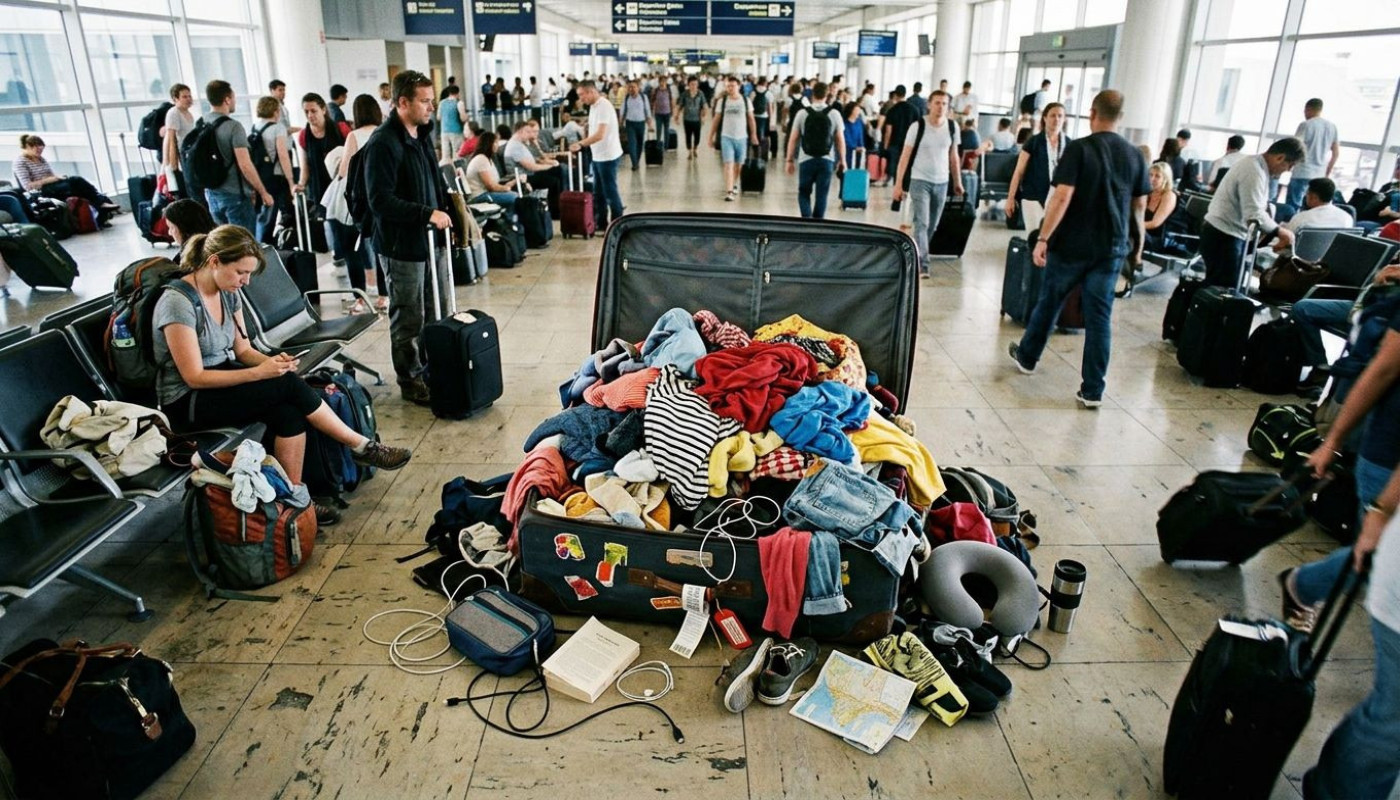
Think you will “need options” ? That belief is the seed of most packing disasters, and it thrives on two familiar illusions: that your itinerary will go exactly as planned, and that you will have the energy to manage extra stuff once you arrive. In practice, overpacking is less about vanity than about risk management done badly, because travelers try to insure themselves against weather changes, dress codes, and imagined emergencies, yet they end up paying with time, money, and physical strain.
The financial penalty is no longer theoretical. Across major airlines, checked-bag fees and overweight charges have climbed steadily, and the threshold is unforgiving: one extra kilogram can trigger a jump from “standard” to “overweight,” while a slightly expanded carry-on can be flagged at the gate. Add the operational risk, too: when flights are full, gate agents are quicker to enforce size rules, and a forced gate-check increases the chance of delays on tight connections. Frequent flyers often describe the same regret: they packed for the trip they pictured, not the one they actually lived, which included long walks to stations, stairs in older buildings, crowded buses, and the very human desire to travel lighter on day three than on day one.
A smarter approach begins with a brutally honest baseline. Build your list around the longest stretch without laundry, then cap duplicates, and commit to a color palette that allows repetition without looking repetitive. If you are traveling in variable climates, prioritize layering over bulk, because a thin base layer and a mid-layer usually outperform a single heavy sweater. Finally, reserve a small “buffer” space, not for souvenirs, but for reality, because a rain-soaked jacket, a last-minute grocery run, or an extra pair of shoes after a blister can all expand your load, and you do not want your bag to be packed to the zipper before you have even left home.
Liquids and batteries: rules bite late
Nothing feels more avoidable than a security headache, and yet it happens every day. The reason is simple: many travelers pack by routine, not by regulation, and they only discover the mismatch when a bag is pulled aside, a line stalls, and the clock starts to feel loud. Liquids, aerosols, gels, and especially lithium batteries are where small misunderstandings can become trip-shaping problems.
Start with liquids. Even when airports deploy newer scanners, the reality is uneven, and you cannot assume that exceptions apply everywhere on your route. The classic 100 ml limit for carry-on containers remains a standard in many places, and if you are connecting through multiple airports, the strictest checkpoint effectively sets the rule for the whole day. Travelers most often get caught by “borderline” items: large sunscreen bottles for beach destinations, duty-free liquids opened too early, and multi-use cosmetics that do not feel like liquids until an agent treats them as such. The fix is mechanical, not moral: decant into compliant containers, put all liquids in one accessible pouch, and leave yourself two minutes of dignity at the tray, because frantic repacking is when items go missing.
Batteries are the newer trap, and the consequences can be harsher. Airlines typically require spare lithium batteries and power banks to stay in carry-on luggage, not checked bags, due to fire risk, and some carriers impose watt-hour limits that travelers never think about when they buy a device online. Add the confusion around e-cigarettes, camera batteries, and high-capacity power banks, and you get a perfect storm of last-minute surrender. A practical rule helps: assume spares go with you in the cabin, tape or cover exposed terminals, and store them in a dedicated case. If you are unsure about a device, check airline guidance before you fly, not while you are standing under fluorescent lights at the checkpoint.
Clothes fail when you ignore the destination
“I packed for the plane, not the place.” That is the line many travelers repeat after an uncomfortable day, and it is not only about fashion. Clothing mistakes can derail schedules, limit access to cultural sites, and add unplanned spending, especially in destinations with strong seasonal swings or specific etiquette.
Japan is a classic example of how assumptions can backfire. Summer can be humid and punishing, while winters in parts of the country are genuinely cold, and shoulder seasons can shift quickly between crisp mornings and warm afternoons. Beyond weather, there are practical considerations: you may be taking your shoes on and off, walking far more than at home, and spending time in spaces where quiet, modesty, and neatness are valued. Travelers who arrive with stiff new shoes, heavy denim, or a single “nice outfit” often end up buying replacements, not because they want to shop, but because their original kit makes everyday movement harder.
The cultural angle matters, too, and not in a caricatured way. Many temples, traditional inns, and certain restaurants have expectations about attire, and while tourists are rarely “policed,” being appropriately dressed affects how comfortable you feel, how welcome you perceive yourself to be, and how smoothly a day runs when you are moving between neighborhoods. The fix is to pack with context. Choose footwear you have already tested on long walks, bring socks you do not mind removing in public, and add one light, packable layer for indoor air-conditioning, which can feel surprisingly strong in summer. If you are planning countryside trips or high-altitude day tours, treat them as separate micro-destinations, because the temperature and terrain can change dramatically within a couple of hours.
For travelers who want to plan clothing with real local detail, especially across regions and seasons, destination-specific guidance can prevent the “wrong assumptions” problem at the source, and click for info before you finalize your list.
Small items vanish, then the costs spike
Lose one cable, lose an evening. That is how minor packing oversights turn into major inconveniences, because modern travel depends on tiny, easily misplaced items: adapters, charging cables, SIM tools, medication, and the one card that opens your hotel room. When these disappear, the costs are not only financial, they are logistical, and they often land at the worst possible moment, such as late at night in an unfamiliar neighborhood.
Medication is the most consequential category. Travelers frequently pack prescriptions in checked luggage, or they bring only the exact number of doses, leaving no margin for delays. A missed connection, a lost bag, or even a simple extension of a trip can become a health problem, and replacing medication abroad can be complicated by local prescribing rules, brand differences, and language barriers. The same logic applies to glasses and contact lenses, which are often treated as “personal items” until they are suddenly missing. The fix is clear: keep essential medication in carry-on, bring a few extra days if possible, and photograph prescriptions and documents so you can prove what you need.
Then come the tools that make travel function. A universal adapter is useless if it does not cover the sockets where you are going, and even when it does, cheap models can be unreliable, especially when charging multiple devices. Seasoned travelers also learn to separate charging redundancy from charging clutter: one high-quality multi-port charger can replace several bricks, and a short backup cable can save you when the primary one fails. Finally, do not underestimate organization. Use one small pouch for “must-not-lose” items, and keep it in the same pocket every time you move, because the best anti-theft strategy is often just consistency under fatigue.
How to travel lighter without regret
Book with baggage rules in mind, and budget for one paid bag if needed, because forcing an overstuffed carry-on often costs more later. Reserve accommodation with laundry access when trips exceed a week. Check whether your destination offers local travel passes or regional discounts, and look for city or transport subsidies that can reduce the need for costly last-minute taxis when plans shift.
Similar articles

Top Tips For Blending Cultural Experiences With Adventure Travel

Exploring Hidden Gems In Paris's 13th District

Exploring The Benefits Of Renting Versus Buying Ski And Bike Equipment

Exploring The Essence Of Private Guided Historical Tours In A Vibrant Capital City
